Dental Group Reports

Implant Dentistry Today

Dental Implants vs Dental Bridge vs Dentures

Dental Implants

Partial Denture

Partial Denture

In the recient past, tooth replacement options were limited to bridges, partials, and dentures. Dental implants offer a modern alternative to these somewhat problematic solutions. With dental implants, patients experience unrivaled support, comfort, and longevity.SupportAlthough bridges and partials look natural– they rely on neighboring teeth for support. This can result in tooth sensitivity, decay, and additional tooth loss. Dental implants are anchored in the jawbone, just like natural teeth. The titanium implant serves as an artificial tooth root, eliminating the need for abutment crowns (bridges) or metal clasps (partial denture).

Comfort

Because of the artificial tooth roots, dental implants function like natural teeth. You won’t have to worry about slipping, clicking, adhesives, or the embarrassment of removable prosthetics. In fact, dental implants, are so comfortable, you may forget which tooth you had replaced!

dental implants xray

Dental implants xray

Longevity

Ninety-eight percent of implant cases are successful, and implants are designed to last a lifetime. Dentures will have to be relined every 7 to 10 years. Bridges and partials will need to be replaced eventually, as well. Dental implants are the only tooth replacement option that will serve you the remainder of your years.

The Benefits of Implant Retained Dentures

Nothing is more frustrating or uncomfortable than a loose fitting complete denture.  There is no other dental prosthesis that can be enhanced by the placement of dental implants. Dental implants improve the support, retention and stability of a full or complete denture.

Implant Retained Dentures, implant supported partial or full dentures stabilize the removable denture in place reducing the slip and movement when speaking or eating.Implant Retained Dentures

The concept of implant supported over-dentures is not new, over-dentures originally were used with remaining tooth roots sticking up through the gum to stabilize and retain the denture. Retaining the tooth roots also helps to preserve the jaw bone.

When a tooth or teeth are lost, bone loss also occurs.  Over time a toothless jaw battered by a denture has substantial bone loss.  Dental implants, like teeth, conserve jawbone. If possible it is advised that dental implants be placed, as soon as possible, to avoid bone loss.

Dental implants are artificial teeth roots made from titanium screws that are placed in the upper or lower jaw that stabilize the removable denture. Depending on the number and location of the implants, the denture can be completely retained, supported and stabilized by the implants. During an implant procedure, 4 implants can be placed in the upper jaw that could enable the elimination of the palate of a full-denture. Two implants in the lower would make a lower full denture more stable and retentive.

Connecting two or more implants with a bar adds more stability, resulting in more chewing efficiency.

There are dozens of clips, snaps, magnets, and bars that help in improving the comfort of full dentures.

One of my favorite attachments is called the locator by (Sterngold). These are simple male/female connections that provide tremendous retentive and stability to a full or complete denture. The locators are easily maintained.

One piece mini-implants can be used as a less expensive option to stabilize a moving denture. The surgical procedure of these mini-implants can be done with minimal conservative techniques

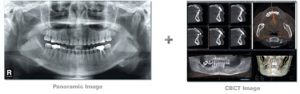
Conservative surgical and prosthetic treatments should always be considered.  A thorough exam both clinically and radiographicly should be preformed.  A cat-scan x-ray of the  jaw could be necessary to determine the quantity and quality of the bone. Using dental implant imaging software (Simplant) the exact location, size and number of implants can be placed. Using this software a surgical stencil can be fabricated to enable a guide that not only creates a minimally invasive procedure but also reduces surgical time.

Future planning can also be considered .Two implants properly placed to support a denture today, could augment future implants should a patient desire a fixed dental bridge at a future date.

In conclusion the advantages of implant over-dentures are improved stability, retention chewing, support, esthetics, speech and comfort.

To learn more about Dental Implants and Implant Retained Dentures, visit the Manhattan Dentist online.

Manhattan Dentist, David Binder, DDS,
551 5th Avenue, Suite 1114, New York, NY 10176
Tel: (212) 867-2730
http://www.ManhattanNYDentist.com